Predictive analytics in fraud prevention: How it works and where to start
How predictive analytics finds fraud that rules miss, what a working model needs, where it is used, and the three steps to bring it into your operations.
 By 6 mins readPublished Updated
On this page
- Why predictive analytics matters in fraud detection
- What predictive analytics does
- Rules versus predictive models
- How predictive fraud analytics works
- What a working predictive model needs
- What predictive analytics gets you
- Bringing predictive analytics into operations
- Three steps to integrate it
- Where predictive analytics is used
- Where implementations go wrong
- Where the market is going
- Where to start
Rule-based fraud systems catch the fraud you have already seen. Predictive analytics is built to catch the fraud you have not: it learns what past fraud looked like across transactions, accounts and behavior, and scores new events against that before the money moves.
Fraudsters change tactics faster than a rules backlog gets updated, which is why the shift to models matters.
Gartner predicted that by 2025, 75% of organizations using machine learning and analytics for fraud detection would see fewer fraudulent transactions than those relying on rules alone.
Why predictive analytics matters in fraud detection
Rules struggle with the volume and variety of signals a modern fraud attempt throws off. Predictive analytics takes the same data, finds the patterns and anomalies that mark fraud, and flags them before the loss, not after.
What predictive analytics does
Fraud analytics applies statistics, machine learning and data mining to historical data to estimate when and where fraud is likely next.
Models trained on past transactions, customer behavior and related data points raise a warning at the moment suspicious activity appears. Done well, that lifts detection rates, cuts false positives and keeps legitimate transactions flowing.
Rules versus predictive models
A rules engine checks each event against fixed thresholds. That works for known patterns, and it is reactive by design: a new scheme passes until someone writes the rule for it.
Predictive models update as the data changes, so they track new tactics without waiting for a human to notice them first.
How predictive fraud analytics works
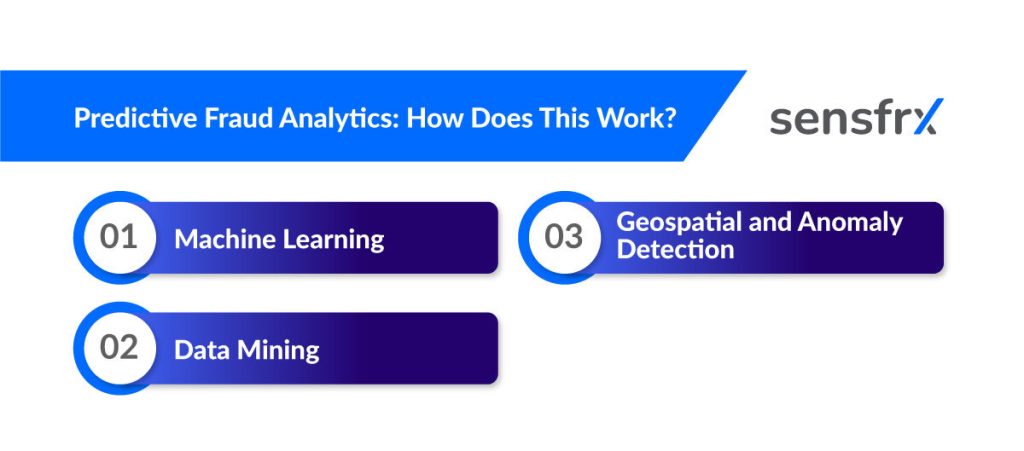
The model learns from history. It takes past fraud cases, finds what they had in common in behavior, timing, device or amount, and scores new events by how closely they match.
Machine learning
Most predictive fraud analytics runs on machine learning, in two broad forms:
- Supervised learning trains on labelled data where the outcome is known (fraud or not). Decision trees and logistic regression are the usual starting points.
- Unsupervised learning is for when labels are scarce. It finds structure in the data without being told what fraud looks like.
Data mining
Clustering groups customers and transactions by behavior, so the ones that sit outside every cluster stand out. That is where hidden patterns in transaction data turn up.
Used early, it catches fraud at the first transaction rather than the tenth.
Geospatial and anomaly detection
Location analysis looks at where and when transactions happen. A purchase from a region the customer has never been in, or at an hour they never shop, is an anomaly worth scoring. Banking and ecommerce lean on it because location says a lot about whether a transaction is real.
What a working predictive model needs
Three things decide whether a model works in production.
Data quality and sources
A model is only as good as its data: accurate, complete datasets, with integrity standards that hold.
In practice that means validation on the way in, periodic audits and continuous monitoring for accuracy, completeness and timeliness.
Algorithm selection
The choice follows the data. Enough labelled history points to supervised learning; thin or unlabelled records point to unsupervised methods.
Weigh interpretability too. A simpler model that explains why it flagged a transaction gets acted on faster than a more accurate one nobody can read. Test several algorithms on your own data before settling.
Model training, validation and testing
Train on historical data, validate on data the model has not seen, and keep testing after launch so accuracy holds as new fraud types appear.
What predictive analytics gets you
A study published by the Association of Certified Fraud Examiners (ACFE) put the reduction in fraud losses at organizations using predictive analytics at up to 30%.
That gap over rules comes from three things.
Real-time, adaptive prevention
Alerts arrive while the transaction is still pending, so the response happens before the loss.
Less manual review
The model handles the clear cases automatically, so analysts review only the transactions that need judgment.
Continuous improvement
Models retrain on new data, so they keep up with new tactics without someone rewriting rules every week.
Bringing predictive analytics into operations
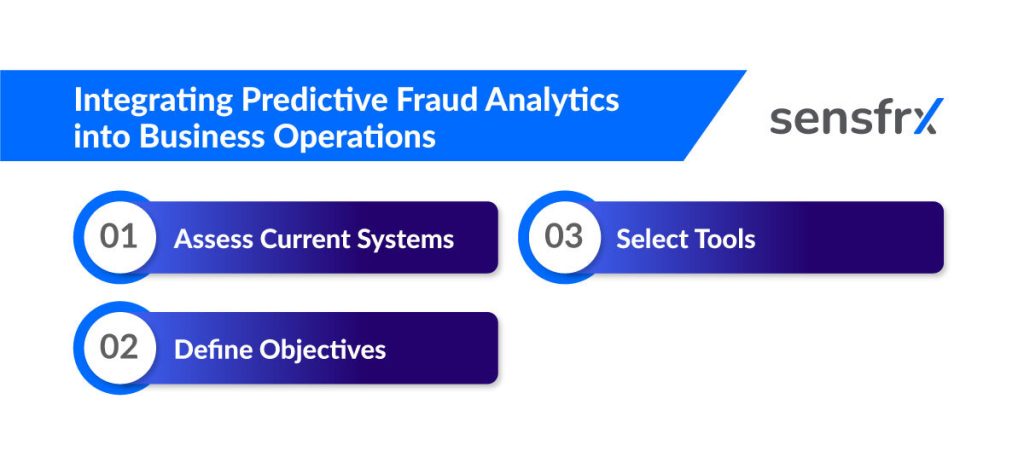
Three steps to integrate it
1. Assess current systems
Audit what you have: detection rate, false positive rate, response time. The gaps tell you where predictive analytics earns its place and where an upgrade to the existing setup is enough.
2. Define objectives
Set measurable goals, such as a 20% cut in fraud losses or a faster time to detection, and tie them to business targets. Clear numbers make the rollout easier and give stakeholders a reason to back it.
3. Select tools
Judge platforms on scalability, ease of integration and machine learning support. Use the vendor's trial to test against your own traffic before committing.
Where predictive analytics is used
Four common applications.
Real-time transaction monitoring
Each transaction is scored against the customer's history as it happens. A sudden change in spending pattern gets flagged for a second look.
Identity theft prevention
Rapid account openings or sharp changes in spending habits are the signatures of identity theft, and models pick them up early.
Anti-money laundering (AML)
Banks use predictive models to surface the transactions that need an AML investigation, instead of reviewing by hand.
Insurance fraud detection
Insurers score claims against historical claims data and pull the ones that deviate from the norm.
Where implementations go wrong
Three problems come up in almost every rollout.
Data privacy and ethics
Predictive models run on customer data, which brings GDPR and CCPA into scope. Be clear with customers about what is collected and how it is used.
Algorithm bias and false positives
A biased model blocks legitimate customers or singles out groups unfairly. Monitor outcomes and retune the model so it stays accurate without those side effects.
Scale and model drift
Transaction volume grows with the business, and the model has to keep its speed and accuracy as it does. Retrain on new patterns on a schedule, or accuracy decays.
Where the market is going
The shift to data-driven machine learning models has built a large market for detection tools.
Fortune Business Insights valued the global fraud detection and prevention market at USD 43.97 billion (2023) and USD 52.82 billion (2024), and forecasts USD 255.39 billion by 2032, a CAGR of 21.8%.
Where to start
Start with the audit: measure your current detection rate, false positive rate and response time, so you know what a model has to beat.
Then run a predictive system alongside your rules on live traffic and compare the two before switching anything off.
[Sensfrx](/) scores every signup, login and payment in real time from device, network and behavior signals, with your rules deciding what each score means. Start a free trial and run it against your own traffic.