Marketplace fraud: How to recognize and prevent it
Four scams that hit online marketplaces, five warning signs of a fake listing or buyer, and five controls (verification, monitoring, reporting) that stop them.
 By 5 mins readPublished Updated
On this page
A Besedo survey found 40% of respondents had been duped on an online marketplace and 58% had run into fake or misleading job adverts. Behind those numbers are fake storefronts on the major platforms selling goods that do not exist, and millions of dollars paid for orders that never ship.
The damage goes past the individual buyer. Each scam that gets through erodes trust in the platform, and a marketplace without trust has no business. The direct costs follow: chargebacks, investigation time, and legal or regulatory exposure.
What marketplace fraud is
Marketplace fraud covers the illegal and dishonest practices used to take money or personal information from a platform's users, on either side of the trade.
The fake shops and listings use the same tools as honest sellers to pull in traffic: paid search, mobile apps and advertising.
Types of marketplace fraud
Scams take many forms; these four are the most common:
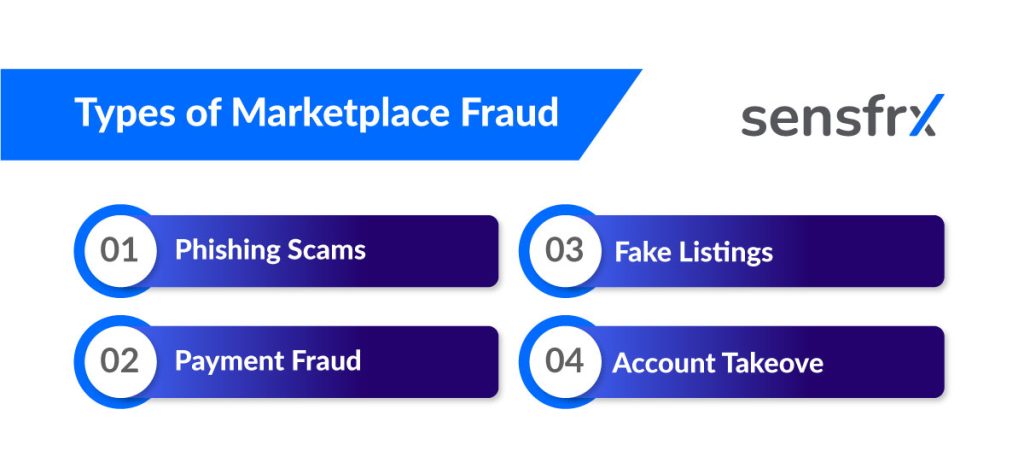
1. Phishing
Emails or messages that appear to come from the marketplace itself and ask the user to confirm a password, card number or other sensitive detail.
2. Payment fraud
The buyer is steered off the platform to an unprotected payment method and pays an account the fraudster controls.
3. Fake listings
The seller lists a product that was never in stock, takes the money and ships nothing.
4. Account takeover
A fraudster gets into a real user's account and buys, sells or withdraws as them. Account takeover protection covers this case on its own.
Warning signs of marketplace fraud
Five signs that a listing, buyer or seller is not what it claims:
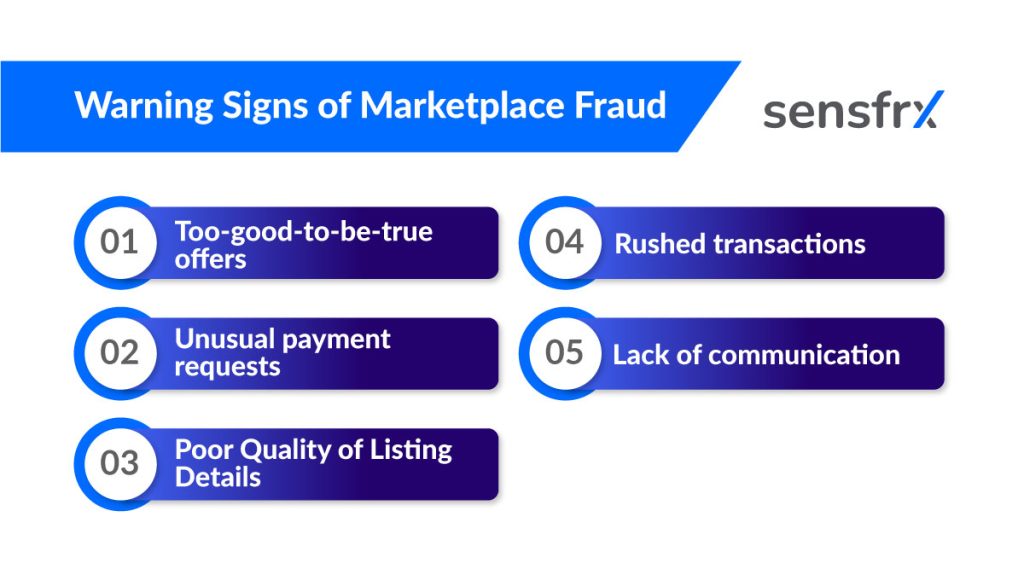
- An offer that is too good to be true. It usually is; treat the listing as a scam until shown otherwise.
- Odd payment requests. Wire transfers, gift cards or any method outside the platform's own checkout.
- Sloppy listing details. Thin descriptions, copied or low-quality images, a layout that does not look like a seller who expects to be around next month.
- Pressure to close fast. A buyer or seller pushing to finish before the item or the payment can be checked.
- Silence. A counterparty who will not answer questions or gives half answers.
Five ways to prevent marketplace fraud
Five controls that fraud teams use to find and stop abusive activity:
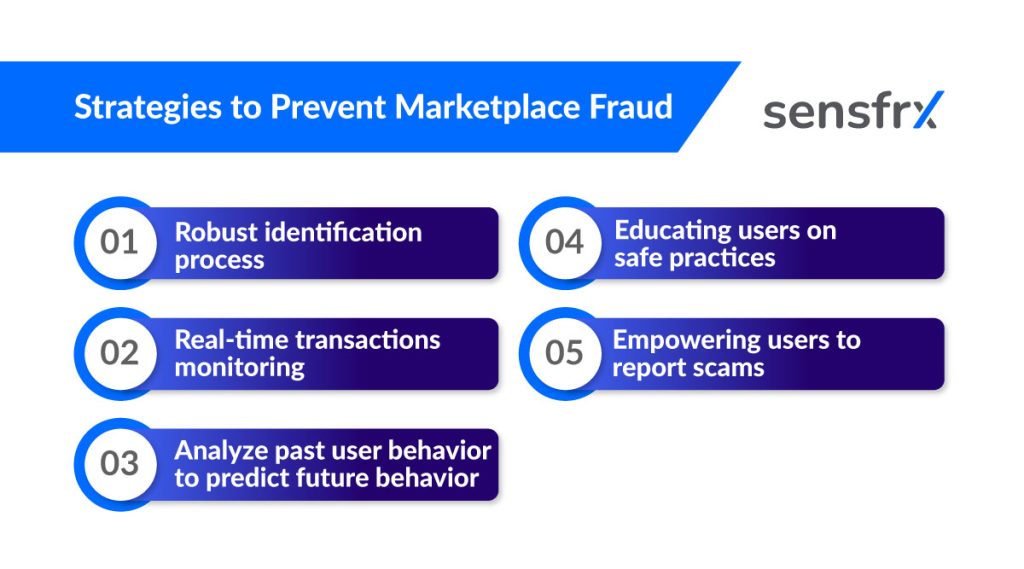
1. Layered identity verification
Identity verification does the most work. Layer it: biometrics, document review and behavioural analysis together, so that passing one check is never enough on its own.
Liveness detection in facial recognition catches impersonation attempts. Verify through the session as well, not just at account creation; a verified signup says nothing about who is logged in six months later.
2. Real-time transaction monitoring
Behavioural analytics spots suspicious patterns before they spread and adjusts as the tactics change.
The same models read unstructured data such as product images and chat logs to catch fake listings and social engineering, and they refine themselves over time, which brings false positives down.
3. Use past behaviour to predict the next move
How a user moves through the marketplace is a signal in itself. Legitimate users and fraudsters use the same features differently, and the difference shows up before the fraud does.
At eBay, for example, a selling account that changes its payment details and then sharply increases its listings has a much higher chance of being fraudulent.
4. Teach users safe practices
Users who know the common scams fall for fewer of them. Marketplaces such as eBay, Amazon, Facebook and X can run awareness campaigns, interactive tutorials and quizzes built around the risks specific to their platform, and reward users who follow the rules with safety badges or scores.
Just-in-time warnings work at the moment of a high-risk action, such as a request to pay outside the platform. Target campaigns by activity and risk profile rather than sending everyone the same message.
5. Make reporting scams easy
Users see scams before your systems do. Put a "Report scam" button on listings, messages and transactions, and keep the flow to a few clicks.
Let them add a line of description or a screenshot. Acknowledge the report and say you are looking at it. Feed the reports into your detection systems; they are the earliest signal you will get on a new scam pattern.
Small rewards for accurate reports can help, but watch for over-reporting.
How Sensfrx helps prevent marketplace fraud
[Sensfrx](/) is a real-time fraud prevention platform that scores every signup, login and payment on a marketplace. What that gives you:
1. Real-time monitoring and detection
Every event is scored as it happens from device, network and behaviour signals, so a suspicious login, listing or transaction is flagged before it completes.
2. Rules you control
Your rules turn the score into allow, review or block, with thresholds set to your own risk appetite and business model.
3. Automated screening
Automated scoring cuts the manual review queue to the cases that need a human, and detection accuracy improves as the models see more of your traffic.
4. Coverage across fraud types
Fake signups, account takeovers, price manipulation and inventory scraping are all caught by the same score.
5. Integration
Plugins for Shopify and WooCommerce, REST APIs for everything else, and a free plan to test on live traffic.
Where to start
Start with identity verification in layers at signup and real-time scoring on every payment. Then add a one-click scam report so users tell you about the next scheme before your dashboard does.
Start your free trial and run Sensfrx against your own marketplace traffic for 14 days.
Source