Regular risk assessments, staff training, encryption, access controls and a tested incident response plan, plus current detection tooling and a habit of tracking new threats.
Cybersecurity threats in healthcare: Ransomware, breaches and bots
The attacks that hit hospitals and patient portals (ransomware, breaches, phishing, credential stuffing, DDoS), what they cost, and the controls that stop them.
 By 6 mins readPublished Updated
On this page
- Common cybersecurity threats in healthcare
- Why healthcare systems are easy to attack
- Types of bot attacks on healthcare
- Fraud run by bots
- What it does to a healthcare system
- Consequences of cyber threats on healthcare
- Prevention and mitigation
- Threats still arriving
- Where healthcare security is heading
- Healthcare and security teams working together
- How Sensfrx helps
- Where to start
- FAQs on cybersecurity threats in healthcare
Healthcare runs on data that cannot be reissued. A stolen card gets cancelled; a stolen medical record stays valid for life, and every leak is a HIPAA violation on top. That is why ransomware crews and bot operators go after hospitals, clinics and patient portals.
The more of the work moves online, the larger the attack surface: patient portals, telehealth, billing, connected devices. Each breach puts patient safety and the organisation's finances at risk, and the reputational damage outlasts both.
Common cybersecurity threats in healthcare
Three attacks account for most incidents:
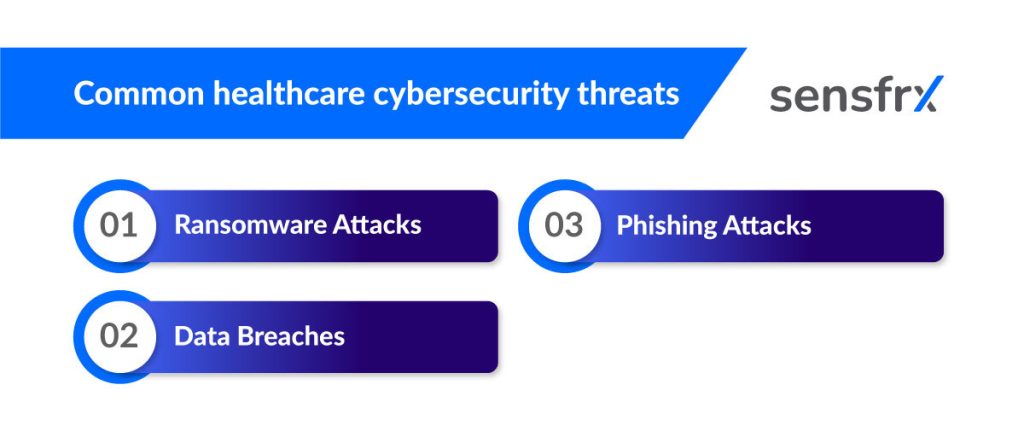
1. Ransomware
Ransomware encrypts the data a hospital needs to operate and holds it until a ransom is paid. A 2020 tally found over one-third of healthcare organisations worldwide had been hit.
2. Data breaches
Healthcare is breached more often than other industries. A Fortra study counted 1.76 healthcare data breaches a day across 2020, each one exposing patient information and breaking HIPAA rules.
3. Phishing
Phishing is still the cheapest way in. An email that looks like it comes from a colleague or a supplier gets a staff member to hand over a login or click a link that installs malware.
Why healthcare systems are easy to attack
Three weaknesses come up in almost every incident:
Legacy systems and outdated technology
Many providers still run systems that stopped receiving security updates years ago. They are the weakest link on the network and the first thing an attacker looks for.
Thin security budgets
Many organisations lack the budget, the staff or the will to put proper controls in place, and that shows from the outside.
Untrained staff
Staff who cannot recognise a phishing email or a fake login page are the way in for most of the attacks above.
Types of bot attacks on healthcare
Automated attacks hit healthcare in four forms:
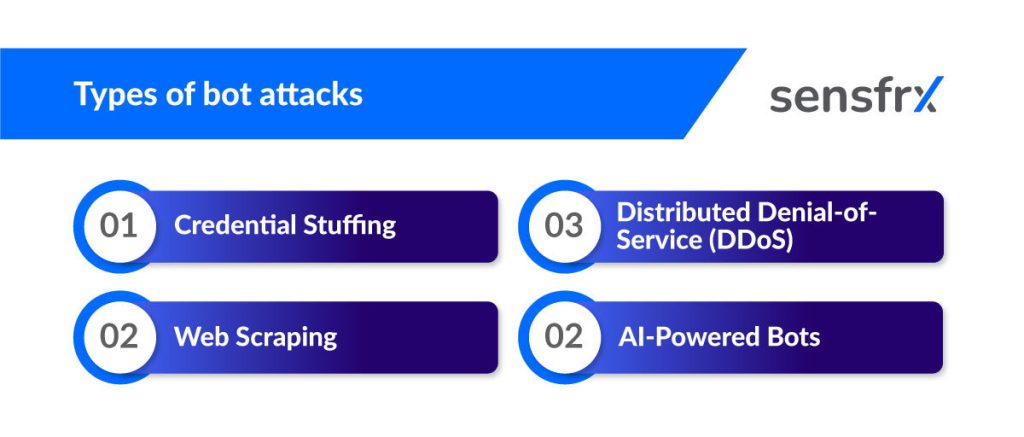
Credential stuffing
Bots replay stolen username and password pairs against login pages until one works. The method is covered in detail in our guide to credential stuffing.
In healthcare that means:
- Access to patient records and protected health information (PHI)
- Takeover of patient portal or provider accounts
- Medical data sold on the dark web
A TechTarget report put bad-bot traffic at healthcare organisations at 31.7%, traffic that ends in breaches and account takeovers.
Web scraping
Scraper bots pull large amounts of data from healthcare websites without permission.
The result:
- Patient information and medical records taken in bulk
- Pricing and other proprietary data copied
- Confidentiality of healthcare data broken
Distributed denial-of-service (DDoS)
Botnets flood a website or system with traffic until it stops responding.
For a provider that means:
- Telemedicine and patient-provider communication go down
- Clinical systems slow or stall, cutting staff off from the information they need
- Patient care suffers while systems are unavailable
Bots that use AI
The newer bots adapt.
They can:
- Change behaviour to get past new security controls
- Find and exploit unknown vulnerabilities by analysing patterns
- Automate large, targeted attacks against healthcare networks
Fraud run by bots
Bots also commit fraud on healthcare platforms directly:
- Fake insurance claims
- Fraudulent prescriptions
- Fake appointment bookings
Each one wastes clinical time and money and chips away at patient trust.
What it does to a healthcare system
Bot attacks slow clinical systems and interrupt operations, and at scale they damage the institution itself.
Stolen medical records and personal data expose patients to identity theft and financial fraud.
The money is large: a healthcare data breach costs an average of $10.93 million per incident.
Public trust falls and some patients put off care. Research programmes lose data and time.
Operations suffer too, from workforce planning to appointment scheduling.
Consequences of cyber threats on healthcare
Patient safety
An attack that slows systems or alters records leads to wrong diagnoses and wrong treatment, and that pushes up the mortality rate.
Financial impact
A single attack runs to millions of dollars in short-term losses. The long-term loss of goodwill, reputation and revenue is larger.
Reputational damage
Reputation is what a healthcare institution has. After an attack, organisations deal with financial instability, a damaged name and legal exposure for years.
Prevention and mitigation
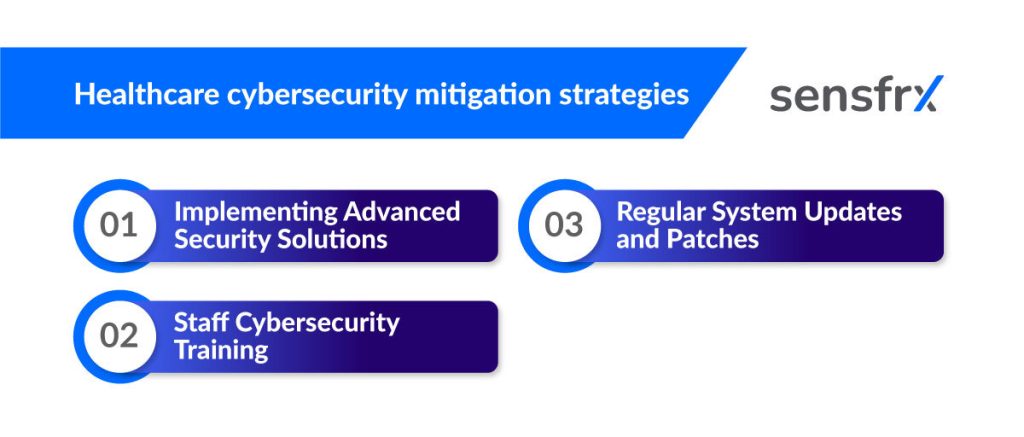
Three controls do most of the work:
Modern security controls
Firewalls, intrusion detection, a Zero Trust architecture and encryption.
Staff training
Train every staff member in data-handling procedures and in spotting and reporting phishing.
Updates and patching
Keep systems and software on current security patches, and run vulnerability assessments and penetration tests on a schedule to find weaknesses before an attacker does.
Threats still arriving
New technology brings new attack paths, and training and controls have to be updated to match.
Where healthcare security is heading
Organisations are adopting AI-driven security tools, blockchain for data integrity and threat intelligence systems.
Cloud migration makes cloud security a core task. Connected medical devices (IoT and IoMT) get the same attention, since a breach there risks the patient as well as the data.
Remote care and telehealth platforms are a security priority in their own right.
Many providers are consolidating security tools to simplify management.
Healthcare and security teams working together
Clinical and security teams need each other: one knows what must keep running, the other knows how it gets attacked.
In practice that means sharing threat intelligence and defence practices, writing security standards specific to healthcare, and enforcing policy the same way across the organisation.
How Sensfrx helps
Sensfrx watches website traffic in real time, analyses user behaviour and picks out the patterns that mark bot activity.
It detects automated crawlers and blocks content scraping, spots the mouse movements and request patterns of credential stuffing, and uses device fingerprinting to tell a real patient from a script. Rate limits and web application firewall rules back it up.
For a healthcare provider that keeps patient portals and payment flows out of the hands of bots and account-takeover crews.
Where to start
Patch the systems you know are old, turn on multi-factor authentication for every staff and patient login, and run a phishing drill this quarter. Then put bot detection in front of the patient portal, because that is where credential stuffing lands.
Sensfrx has a free plan to start with; questions about a healthcare deployment go through the contact page.
FAQs on cybersecurity threats in healthcare