Healthcare insurance fraud detection: Schemes, signals and controls
The main healthcare insurance fraud schemes, the penalties they carry, the analytics that catch them, and the practices insurers use to find and report fraud.
 By 9 mins readPublished Updated
On this page
Healthcare fraud costs billions of dollars a year and pulls money and attention away from patients who need care. The National Health Care Anti-Fraud Association defines it as intentional deception or misrepresentation by an individual or organization to obtain unauthorized benefits. Providers commit it, policyholders commit it, and organized groups work both sides.
Policyholder fraud takes familiar forms: misstating age, hiding pre-existing conditions, false personal or family details, forged documents or bills, inflated claims, and leaving out earlier claims that were settled or denied. Provider fraud is covered below. For more on digital footprinting and related techniques, see the Sensfrx blog.
Healthcare insurance fraud in brief
Losses run to billions each year worldwide. Organized schemes are hard to catch by hand, so detection has moved to analytics that model how a scheme works and flag the claims that fit the pattern.
Types of health insurance fraud
US Medicaid draws a line between fraud and abuse. Fraud is intentional deception or misrepresentation to obtain benefits for yourself or someone else. Abuse is provider conduct that breaks accepted financial, business or medical practice and leaves the program paying for care that was unnecessary or below professional standard. Both drain the program; only one needs intent.
Billing for services not rendered
The provider bills for consultations, treatments or procedures that never happened, often with padded patient records or inflated quantities to match.
How to catch it:
- Audit medical records against billing statements on a schedule, so every billed service has a matching record.
- Cross-check billed services against appointment logs and treatment notes.
- Ask patients to confirm the services they received; mismatches surface claims nobody else would question.
Upcoding and unbundling
Upcoding bills a more expensive service than the one delivered. Unbundling splits a procedure that has a single billing code into several separately billed parts. Both inflate the claim without changing the care.
How to catch it:
- Run billing software that flags code combinations and patterns outside the norm for the specialty.
- Audit billing codes against the underlying medical records.
- Train billing staff on correct coding and on the legal consequences of getting it wrong on purpose.
Falsifying patient records
Patients depend on accurate records for their care. A doctor who records conditions that do not exist, or leaves out ones that do, is committing malpractice as well as fraud, and the wrong entry in a file can turn a manageable condition into a dangerous one.
Penalties for healthcare fraud
Healthcare fraud is a federal crime in the US. Sentences run up to 10 years, or 20 if the fraud caused serious injury. Fines typically range from $10,000 to $50,000 per count.
A convicted provider can lose their medical license for good and be ordered to repay Medicare or Medicaid in full.
What a fraud detection system is built from
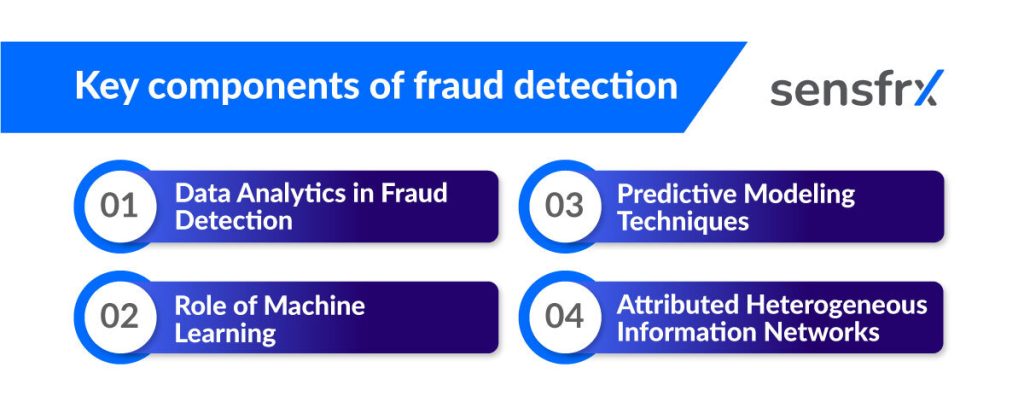
An underwriting or claims team needs four things working together to find fraud at volume.
1. Data analytics
Analytics lets the team work across the whole claims dataset instead of sampling it. Customer behavior, transaction history and claim details are compared against the norm, and outliers such as unusually high claims or high-risk clients get pulled for review.
2. Machine learning
Machine learning models find the patterns in claims data that mark fraud, and they retrain as new data arrives, so a scheme that changes shape still gets caught.
3. Predictive modeling
Predictive models are trained on historical claims with known outcomes and then score new claims. A claim that looks like past fraud gets a higher score and more scrutiny; a claim that looks like past clean claims gets paid faster.
4. Attributed heterogeneous information networks
An attributed heterogeneous information network (AHIN) is a graph with several kinds of nodes (patients, providers, claims, pharmacies) and several kinds of edges between them, with attributes attached to both. Fraud rings show up as structure in that graph: shared addresses, providers who only ever bill the same patients, prescriptions that loop. A flat claims table hides all of that.
Six practices that catch medical insurance fraud
Medical insurance fraud costs billions a year, and the cost lands on everyone's premiums, not just the insurer's balance sheet.
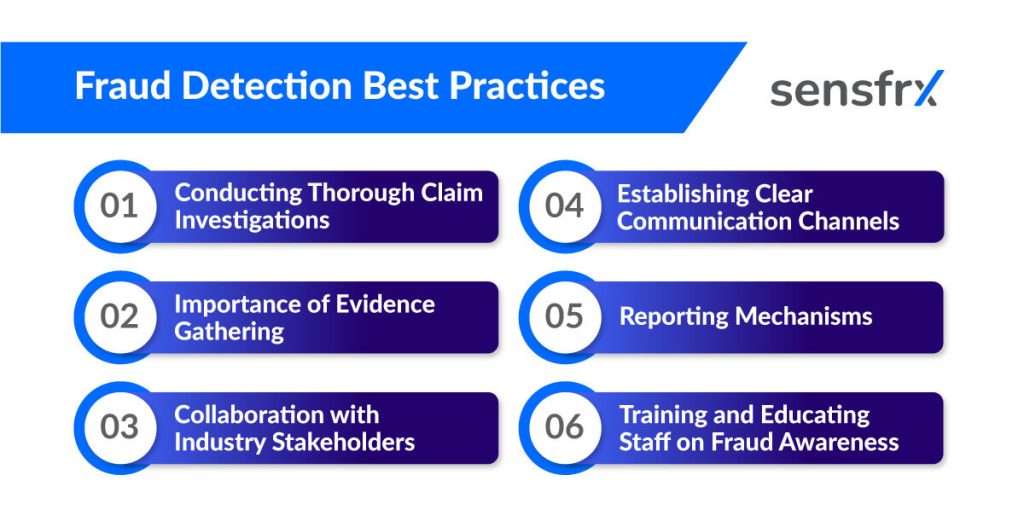
Six practices do most of the work.
1. Investigate claims properly
Review the whole claim: medical records, billing codes, provider history, patient history. Red flags show up in the relationships between those pieces, not in any one of them.
2. Gather evidence that will hold up
A suspicion is not a case. Document the pattern, the anomaly and the supporting records so the finding survives a dispute, a regulator's question or a court. Good evidence files also reveal repeat patterns across claims.
3. Share what you find
Insurers, law enforcement, regulators, providers and patient groups each see a different slice of a fraud scheme. Shared intelligence turns those slices into the whole picture.
4. Make reporting easy
Give staff and customers a clear route to report suspected fraud. A visible reporting channel also deters it.
5. Run more than one reporting channel
Hotlines, online portals, a dedicated email address and an in-house fraud team each suit a different reporter. Speed matters: the sooner a report lands, the less gets paid out.
Hotlines work for anonymous whistleblowers. Portals let people file without identifying themselves. A named email address gets reports straight to the fraud team.
6. Train staff to recognize and report fraud
Every employee, whatever their role, should know they are expected to report suspicious activity and what happens if they do not.
Regular training sessions should cover the common fraud types, the warning signs and the reporting procedure.
Putting a detection system in place
A detection system is only as good as its model of the schemes it is looking for. Pattern and anomaly detection work once the team has mapped the fraud types that matter in its own book of business and pointed the technology at the high-risk ones.
Where hierarchical attention mechanisms fit
With losses in the billions each year, insurers have turned to machine learning and AI. One technique used in research on claims data is the hierarchical attention mechanism, a model design that weighs inputs at several levels before reaching a decision.
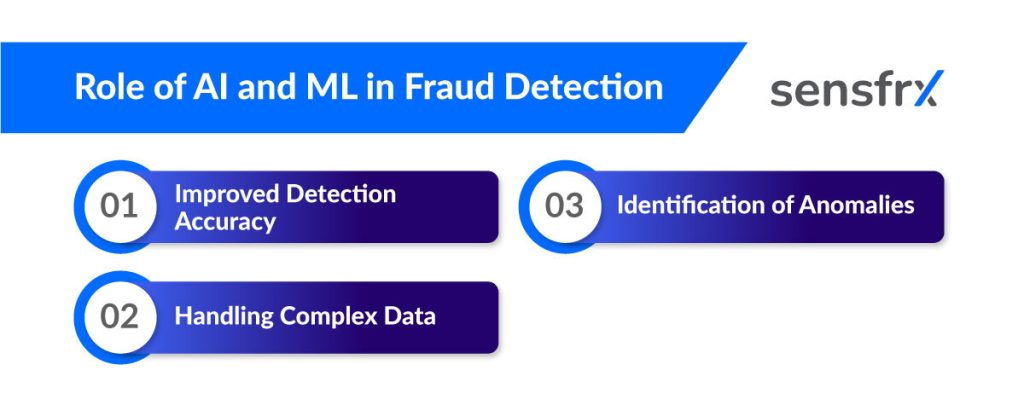
It helps in three ways:
- Better accuracy. It combines several sources, such as medical bills, claim forms and provider history, instead of judging a claim on one of them.
- Handles messy data. Claims data is large and varied, and simpler methods produce false positives or miss cases. The model breaks the data into segments, analyzes each and recombines them.
- Finds subtle anomalies. It gives more weight to the features that matter for a given claim, which surfaces patterns that manual review and simpler models miss.
Fraud detection inside claim processing
Detection has to run inside the claims pipeline, not after payment. Schemes change too fast for manual review to keep up, so insurers need automation that scores claims as they arrive.
The first step is a map of the fraud you face: provider fraud such as kickbacks and unbundling, and member fraud such as identity theft and invented conditions. Each risk points to the technology that catches it.
Continuous monitoring and quality control
Fraudsters adapt to whatever check you add, so detection cannot be a one-time project.
Continuous monitoring means collecting claims, prescriptions and patient data as they arrive, analyzing them in real time and alerting on irregular patterns while the claim is still open.
Where healthcare fraud detection is heading
New schemes keep appearing, so detection capability and regulatory knowledge both need regular upkeep.
New detection technologies
With most claims data now electronic, AI and machine learning models are the standard way to find fraudulent patterns. They flag anomalies and suspicious claims that a manual reviewer would miss at volume.
Blockchain is the other technology under discussion: a shared, tamper-evident ledger that would make patient and claims records much harder to alter after the fact.
Regulation and compliance
- Regulation. Medicare and Medicaid update their guidance as schemes change, and organizations that fall behind face penalties. Telemedicine, which grew sharply during the COVID-19 pandemic, brought a wave of remote-care scams and new rules with it.
- Compliance. Beyond the regulatory minimum, run regular audits and risk assessments to find weak points in your own operations, and train staff at every level to recognize and prevent fraud.
How Sensfrx helps
Claims analytics catches fraud in the claim. Sensfrx covers the other door: the accounts and payments around it. Member portals, provider logins and premium or copay payments are where account takeover, fake signups and stolen cards show up, and those are the events Sensfrx scores.
Every signup, login and payment is scored in real time from device, network and behavior signals. Your rules decide what happens at each score: allow, send to review, or block. A login from a new device on a known-bad IP gets sent to review or blocked before anyone reaches patient data.
Integration is by REST API or plugin, with a free plan and a 14-day trial to test against your own traffic. Fraud prevention for healthcare covers the setup in more detail.
Start on the free plan, or contact us with questions about a healthcare deployment.
Where to start
Map the schemes that hit your book first: services not rendered, upcoding, unbundling, falsified records. Then put analytics and machine learning on the claims stream, audit on a schedule, and give staff and customers an easy way to report what they see.
Treat AI models, hierarchical attention and blockchain as tools to evaluate, not goals. Check that each one catches a scheme you have seen in your own data.
Frequently asked questions
What is healthcare insurance fraud?
Intentional deception or misrepresentation to get unauthorized benefits from a health insurer: false claims, falsified patient information, or inflated services.
Why does healthcare fraud detection matter?
Fraud losses raise premiums and pull money from patient care. Catching it early keeps costs down and keeps the system working for the people who need it.
What are the common types of healthcare insurance fraud?
Billing for services not rendered, upcoding, unbundling and falsifying patient records.
How can healthcare providers prevent billing fraud?
Audit medical records against bills on a schedule, cross-check billed services against patient visits, and ask patients to confirm what they received.
What is upcoding and how is it detected?
Billing a more expensive service than the one delivered. Billing software that flags unusual code patterns, audits of codes against records, and trained billing staff catch it.
How does data analytics help detect healthcare fraud?
It compares every claim against the norm for its type and flags the outliers: high-risk claims, odd billing trends and other red flags that a sample-based review would miss.
What role does machine learning play in fraud detection?
Models learn the patterns that mark fraud from past claims and keep learning as new data arrives, so they keep up with schemes that change.
What are the best practices for detecting healthcare insurance fraud?
Investigate claims fully, document the evidence, share intelligence with other insurers and regulators, and run analytics and machine learning on the claims stream.