Someone uses false or stolen information to open an account or apply for credit. It is also called first-party or applicant fraud.
10 ways to prevent onboarding fraud
Ten controls that stop fake and stolen identities at signup: identity and document checks, device and IP layers, AML screening and the metrics to watch.
 By 10 mins readPublished Updated
On this page
Onboarding fraud is a fake or stolen identity getting through your signup. It takes three main forms: identity theft, where a real person's details open the account; synthetic or bulk fake registrations; and falsified application data, where the applicant is real but the income, address or history is not.
The loss is direct (credit extended to nobody, promo credit burned, chargebacks on the first order) and indirect (KYC and AML findings, a user base you cannot trust). The ten controls below stop most of it at the point of signup, before the account exists.
Ten controls for onboarding fraud
Onboarding fraud is also called first-party or applicant fraud: someone uses false information to open an account or apply for credit. Banks and lenders feel it first, but any business with a free tier, a trial or a saved payment method is a target.
1. Verify identity with machine learning, not just a form
A name, email and date of birth typed into a form prove nothing. Identity verification that holds up compares what the applicant submits against evidence they cannot type: a document, a face, a device history, a behavior pattern. Machine learning does the comparison fast enough to run inside the signup instead of in a queue behind it.
Five ways to apply it:
- MFA with extra signals. Password plus SMS code is the floor. Add biometric factors (face, fingerprint) and behavioral analytics (typing pattern, mouse movement) so a stolen code on its own is not enough.
- Biometric verification. Algorithms match facial features, fingerprints or voice against the enrolled sample.
- Behavioral biometrics. Typing speed, how the phone is held, how the applicant moves through the site. Bots and fraud farms do not match a normal user's pattern.
- Document verification. OCR reads a passport, driver's license or ID card, and a model checks the data against official records and the document against known templates.
- Real-time checks. The submitted data is cross-checked against databases while the applicant is still on the page, so a bad application stops before the account is created.
2. Use biometric authentication
Biometric authentication verifies a person by a trait that is hard to copy: fingerprint, face, iris, voice, or behavior such as typing pattern or gait.
What it buys you
Four things:
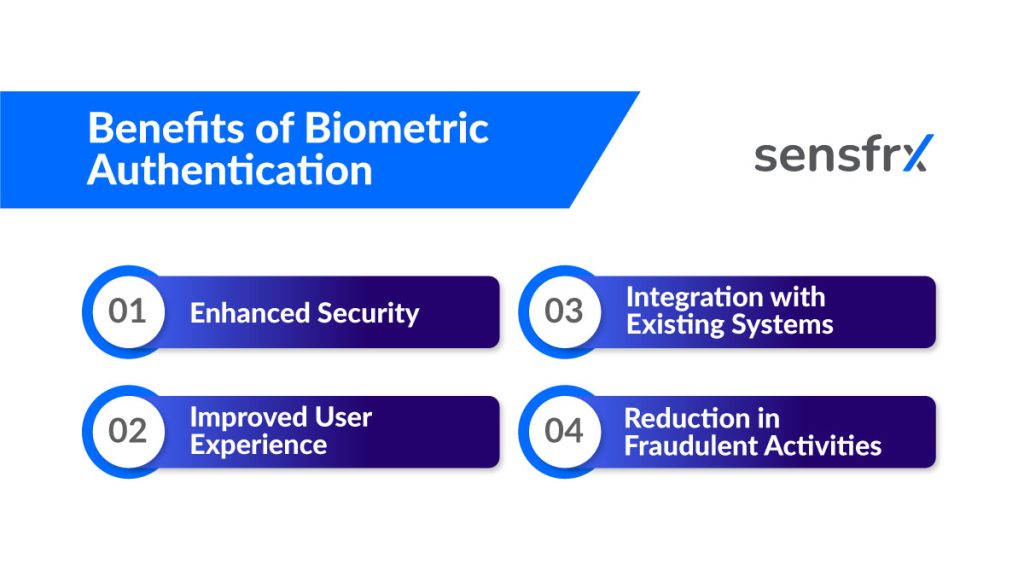
- Security. The trait is unique to the person and far harder to steal or replay than a password or PIN.
- Less friction. Nothing to remember, nothing to carry; a face or fingerprint check takes a second.
- Fit with existing systems. Modern biometric products plug into current identity and access management stacks.
- Fewer fraudulent accounts. Where the trait is checked, fraud rates drop, which is why finance and healthcare adopted it first.
Where it is already used
Three sectors run it at scale.
- Banking. Fingerprint or face match when a customer opens an account online or logs into the mobile app.
- Healthcare. Iris or face scans at admission so the right patient gets the right treatment and the right record.
- Government. Fingerprints and face recognition at border control and in immigration processing.
3. Automate the checks
Manual review does not scale to signup volume, and reviewers get tired. Automation handles the repetitive checks and leaves people the hard cases.
What it changes:
- Speed. Data entry, document processing and the standard onboarding checks run without a human in the loop.
- Consistency. The model applies the same rules to applicant ten thousand as to applicant one, with no fatigue and no bias from a long shift.
- Real-time decisions. Risk is scored as the data arrives, so a suspicious application is flagged and held while the applicant is still in the flow.
4. Layer device, IP and document checks
One check is easy to beat. Three independent checks, each looking at a different part of the application, are not. The fraudster who has a clean stolen ID still has to bring a clean device and a clean network.
- Layer 1, device. Collect and score the applicant's device: location, IP address, browser fingerprint and related signals. A device that has already opened five accounts is a signal on its own.
- Layer 2, IP. Check where the application comes from: IP geolocation, proxy detection, VPN use. This catches applicants hiding their real location and identity.
- Layer 3, document. Scan and validate the government-issued ID the applicant provides, such as a driver's license or passport.
5. Run compliance checks in real time
AML and sanctions screening belong inside the signup, not in a batch job the next morning. By the morning the account has been used.
Three reasons:
- Regulation. Governments mandate AML compliance to stop money laundering, terrorist financing and fraud, and the rules bite hardest in finance, insurance and ecommerce.
- Risk. Screening at onboarding, at each transaction and through the relationship catches the customer whose status changes after day one.
- Detection. A screening hit at signup stops the account before it can move money.
6. Build workflows that change with the fraud type
Identity theft, payment fraud, account takeover and friendly fraud each leave different traces, so one fixed approval flow cannot serve all of them. Start by mapping which types hit your signup and what each looks like in the data.
Then track the patterns. A system that records which signals preceded each confirmed fraud case tells you which checks to tighten, and for which kind of applicant.
Write down the response for each flag before it fires: who reviews, within what time, with what authority to block. Where the decision is routine, automate it with scoring rules so the review queue only holds the cases that need a person.
7. Keep friction low for real customers
Every extra field and step loses real applicants as well as fraudsters. Four ways to keep the balance:
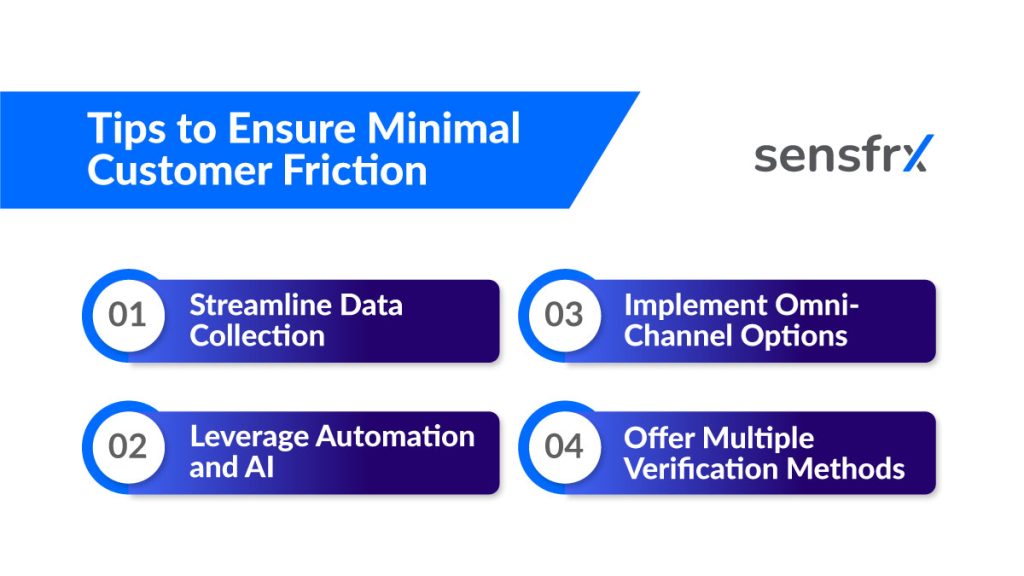
- Ask for less up front. Collect the minimum at signup and the rest over time (progressive profiling). Long forms get abandoned.
- Verify in real time. Automated checks mean no waiting for a manual review, with the same accuracy.
- Offer more than one channel: online, phone or in person, so the applicant picks what suits them.
- Offer more than one verification method: SMS, email or biometric, so the applicant picks what they have to hand.
8. Train the team
Fraud techniques change, and the person approving edge cases needs to know what this quarter's pattern looks like. Training is a schedule, not a one-time course.
Two reasons it matters:
- Current tactics. Staff who know the latest scheme catch it; staff trained two years ago do not.
- A culture of awareness. People who understand the risk are more careful in day-to-day decisions, so fewer bad applications slide through unnoticed.
Where to get the material
Webinars, workshops, expert-led seminars and internal programs built around your own cases all work. The internal ones stick best because the examples are yours.
Cover the common schemes (phishing, identity theft), the red flags (unusual account activity, requests for sensitive data), your security procedures, how to report a suspicion and the regulations that apply to you.
9. Keep fraud detection tools current
Fraudsters test your controls and move to whatever still works. Rules and models written for last year's pattern miss this year's. Updates bring new detection features and retrained models, and three things improve when you apply them.
- Accuracy. Current models catch the current attacks.
- Fewer false positives. Stale rules flag good customers for behavior that is now normal, such as a new device type or payment method.
- Deterrence. Fraud rings probe for soft targets where they expect to get through unnoticed; a tool that visibly adapts sends them elsewhere.
10. Watch the onboarding metrics
Three numbers tell you whether the controls above are working, and whether they are costing you customers.
- Application abandonment rate: the share of applicants who start and do not finish. A high rate points to too many steps, confusing requirements or a slow check.
- Verification failure rate: how many applications failed a check. It is a count of fraud caught, and a spike is a sign that a ring has found your signup or that a check is broken.
- Time to onboard: elapsed time from submission to a working account. Long times push real customers to a faster competitor.
Read them together
Low verification failure with high abandonment and a long time to onboard means the security is fine and the flow is the problem. High failure with normal abandonment means the controls are catching something; find out what.
Track them over time
Compare each month with the last. When you change a rule or add a check, the next month's three numbers tell you whether it helped.
How Sensfrx stops onboarding fraud
Sensfrx scores every signup as it happens from device, network and behavior signals, and your rules turn the score into allow, review or block. The applicant sees no extra step.
The device and network layer runs on each registration: browser fingerprint, IP reputation, proxy and VPN detection, and whether this device has opened accounts before. A high score can trigger step-up verification, a review or a block, depending on the rule you set.
Behavior is scored alongside: typing rhythm, form-fill speed, navigation pattern. Signups that look like a script or a fraud farm score high even when the identity data looks clean. Plugins cover WooCommerce, Shopify, WHMCS, Blesta and WISECP; REST APIs cover everything else.
Where to start
Start with the layer you can switch on without changing the signup form: device and IP scoring on every registration. It catches bulk fake accounts and repeat offenders on day one.
Then add document and biometric verification where the account value justifies the friction, and AML screening where regulation requires it.
Write the response workflow before the first flag fires, and put the three metrics on a dashboard so you can see what each change does.
Frequently asked questions