KYC collects and verifies identity details when an account is opened or a transaction is made, which makes it harder for a fraudster to use a stolen identity or open a fake account.
Credit card fraud: How it works and how to stop it
How credit card fraud works, from skimming and phishing to the chargeback, why detection is hard, and the controls that stop it for cardholders and merchants.
 By 7 mins readPublished Updated
On this page
Credit card fraud is the use of someone else's card details to buy goods, withdraw cash or move money without their consent. The details come from stolen cards, skimmers, phishing, data breaches and hijacked online accounts. The cardholder gets the loss, the credit damage and the paperwork. The merchant gets the chargeback.
The Nilson Report put global payment card fraud losses at $27.85 billion in 2018.
What credit card fraud costs a digital business
Three costs land on the merchant.
- Lost revenue. An order paid with a stolen card is a chargeback waiting to happen. The merchant loses the goods, the sale amount and the chargeback fee, and sometimes legal costs on top.
- Reputation. Customers stop trusting a store that has been hit by fraud, and the publicity sends them to a competitor.
- Security spend. Preventing fraud costs money too: tools, staff and process. For a small business with thin margins that spend is hard to find, and skipping it costs more.
How credit card fraud works
A fraudster gets hold of the card details and spends against them. The cardholder finds out when the statement arrives or the bank flags the activity, often days after the money moved.
The three steps
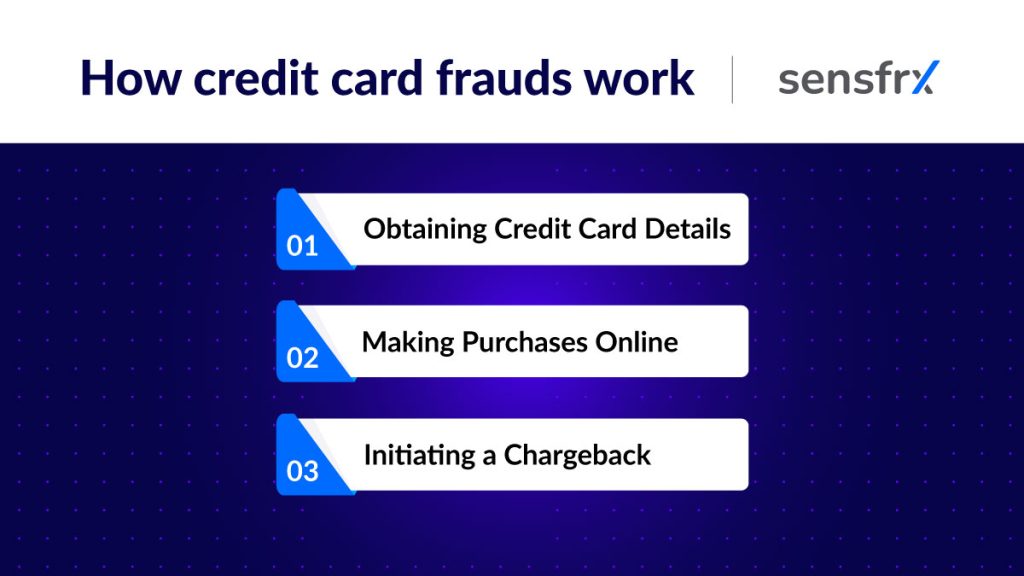
- Get the card details. Database breaches and phishing are the main sources. A phishing message imitates a bank or retailer and asks for the card number, expiry date and security code.
- Spend them online. Online checkout sees neither the card nor the person, so a stolen number works until the issuer or the merchant stops it. Fraudsters open fresh accounts on e-commerce sites or use stolen identities to look like a new customer.
- The chargeback. The cardholder spots the charge and disputes it with their bank. They get their money back. The merchant loses the goods and the sale, and pays the fee.
How fraudsters get card details
Six channels supply most stolen card data.
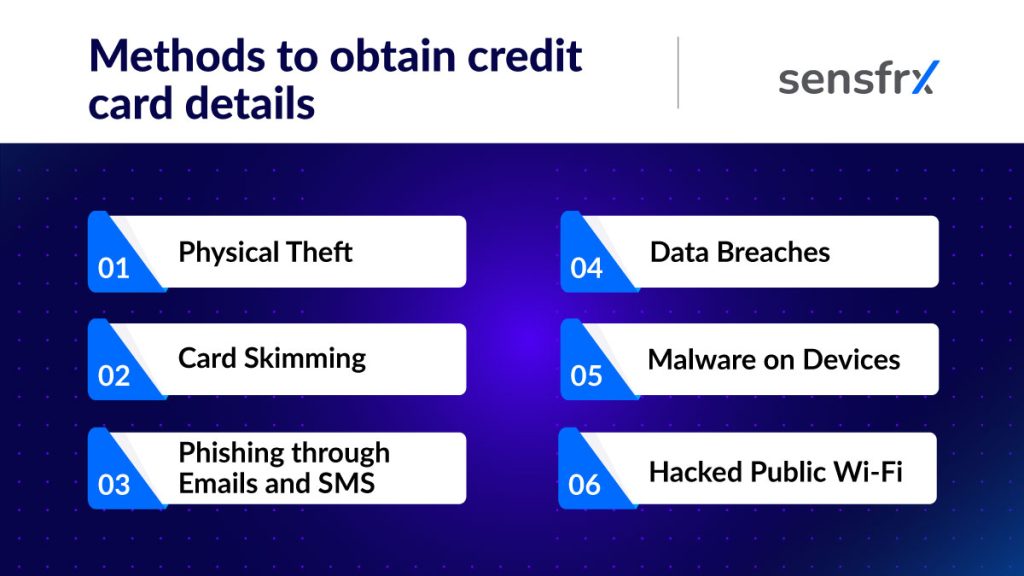
- Physical theft. The oldest method: pickpocketing, wallet theft, cards and PINs lifted from mailboxes. The card then buys goods or draws cash at an ATM.
- Skimming. A small reader fitted to an ATM, gas pump or store terminal records the magnetic stripe when the card is swiped. The data is used to clone the card.
- Phishing by email and SMS. A message that looks like it came from a bank or retailer asks for card numbers, expiry dates and CVV codes.
- Data breaches. Attackers get into a database that holds card details, through a software weakness or a human mistake at the company holding the data.
- Malware. Software on a computer or phone captures card data during a transaction or logs keystrokes to pick up banking and shopping logins.
- Public Wi-Fi. On an open network an attacker can intercept traffic and read card details out of it.
Why credit card fraud is hard to detect
Fraudsters change methods faster than most detection systems change rules. Four problems make the job hard.
Volume of daily data
Transaction volume keeps rising, and each transaction has to be judged in real time. A batch review that takes hours or days lets the fraud through and the goods out the door.
Machine learning handles that volume. Models score each transaction as it arrives and return an answer in the time a checkout takes.
Limited data
Privacy law restricts how customer data is shared, so no single company sees enough fraud to train a model on its own. The same restrictions limit cooperation between companies working on the same problem.
The practical answer is to build the internal dataset: transaction histories, device data and behavior patterns from your own traffic, and train on that.
Misclassified transactions
Not every fraudulent transaction gets caught. Each miss is a loss for the issuer or the merchant, and a signal to the fraudster that the method works.
Misses happen because tactics change. A model trained on last year's fraud scores last year's fraud well, and the new pattern slips through until the model is retrained.
False positives at volume
With millions of transactions a day, rule-based systems flag many that are fine. Each false positive is a customer declined at checkout, a lost sale and a support ticket, so over-blocking has a cost too.
Technologies that prevent credit card fraud
These are the tools in production use today. None works alone.
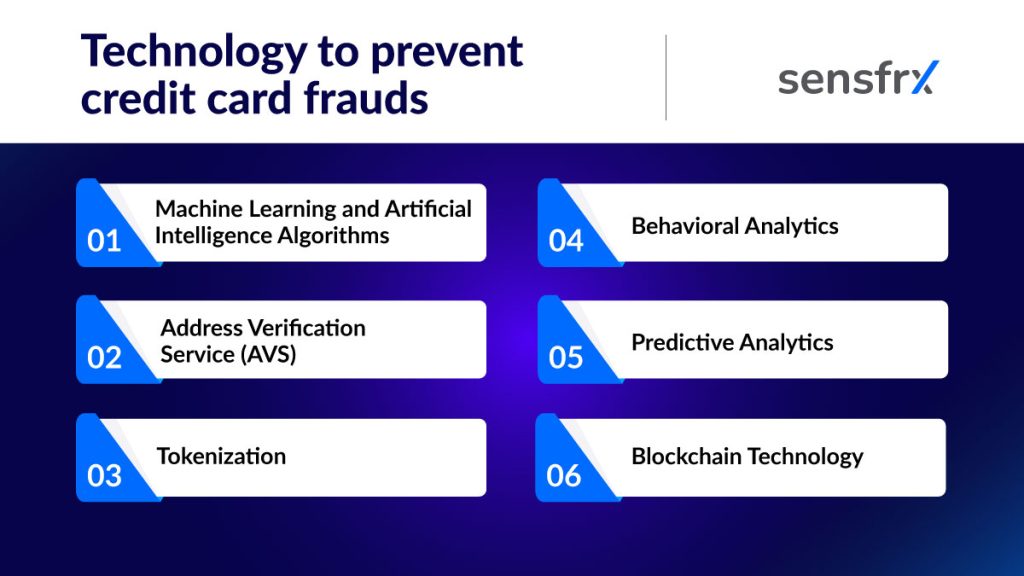
- Machine learning. Models learn from historical transactions what normal spending looks like for each customer and flag what deviates. They improve as new data arrives.
- Address Verification Service (AVS). Compares the billing address entered at checkout with the one the issuing bank holds. A mismatch is a common sign that someone other than the cardholder is paying.
- Tokenization. Replaces the card number with a random token that is useless to anyone who intercepts it. A breached database of tokens exposes no cards.
- Behavioral analytics. Watches how the user behaves during the session, not just what they buy, and flags behavior that does not match the account's history.
- Predictive analytics. Combines past transactions with signals such as location and device to estimate the risk of this transaction before it is approved.
- Blockchain. Still being explored. A decentralized, tamper-evident ledger would make transaction records difficult to alter after the fact.
How to prevent credit card fraud
What to do depends on which side of the transaction you are on.
For cardholders
- Keep card details private. Do not share the PIN or CVV, keep the physical card safe and use strong passwords on shopping accounts.
- Read every statement. Report any charge you do not recognize to the bank at once. Most issuers have a zero-liability policy that covers fraudulent charges.
- Stay off public Wi-Fi for payments. Open networks are easy to intercept.
- Do not pay on unfamiliar sites or apps. Check for https:// and the padlock, and do not install apps from unknown sources; some exist only to steal card data.
- Check your credit report. New accounts or credit inquiries you did not make mean someone is using your identity.
For merchants
The merchant carries the chargeback, so the merchant has the most to gain from stopping fraud at checkout.
- Turn on AVS. When the billing address does not match the issuer's record, hold the order or ask for more verification before shipping.
- Require multi-factor authentication at login and at payment. A one-time password by email or SMS is enough to stop an attacker who holds only a password.
- Use a payment processor or gateway that encrypts and tokenizes card data, so your systems never hold the raw number.
- Stop card testing. Fraudsters validate stolen cards with small charges before the real purchase. Look for bursts of small transactions from different cards that share a device, address or other details.
- Keep PCI DSS compliance. The Payment Card Industry Data Security Standard sets the baseline for anyone processing card payments: secure networks, regular monitoring and testing, strict access control.
- Run automated fraud detection. A system that scores each transaction on history, behavior and device fingerprint in real time stops the fraudulent order before it is approved.
How Sensfrx helps with credit card fraud
Sensfrx scores every payment before it is approved. It builds a profile for each user from transaction history, spending pattern, location and device fingerprint, then gives each transaction a risk score in real time. Your rules turn the score into allow, review or block, so a stolen card is stopped at checkout rather than discovered in next month's chargebacks. Sensitive data is encrypted, and the models update as fraud patterns change.
Frequently asked questions