Credit card piggybacking: What it is and how to prevent abuse
What credit card piggybacking is, how traditional and for-profit piggybacking differ, which businesses it hurts, and the checks that stop the abuse.
 By 5 mins readPublished Updated
On this page
Credit piggybacking is adding someone as an authorized user on a credit card so the account's payment history lands on their credit report. FICO reports the practice has grown 50% since 2016. Between family members it is legal and useful. Done for profit, or without the cardholder's knowledge, it is fraud, and it sits inside a global credit card fraud loss figure of $28.58 billion (2021).
TRUSTID found unauthorized account access to be a major contributor to card fraud losses, and piggybacking abuse is one of the routes to it.
What credit card piggybacking is
Someone becomes an authorized user on an established credit account and inherits the account holder's positive history without being liable for the payments. For a person with a thin credit file, it is the fastest route to a better score.
It is legal when both parties consent. It becomes fraud when there is deceit or no consent: someone adds themselves as an authorized user without the holder's knowledge, or the arrangement exists to mislead a lender about creditworthiness.
How it works
Credit scores are built from payment history, how much of each credit limit is in use, length of credit history and a few other factors. An authorized user on your account gets your version of those factors copied into their file. There are two ways this happens.
Traditional piggybacking
- The primary account holder adds a friend or family member as an authorized user.
- The authorized user may get a second card on the same credit line.
- Activity and payment history on both cards report to both people's credit files.
- If the holder pays on time and keeps balances low against the limit, the authorized user's score benefits.
For-profit piggybacking
- Companies sell authorized-user slots on strangers' cards that have excellent histories.
- The buyer gets no card and no access to the account; they are listed as an authorized user and nothing more.
- The stranger's payment history and low balances are imported into the buyer's credit report, lifting the score without any credit management on the buyer's part.
Traditional versus for-profit
The difference is who adds you. Traditional piggybacking is a person you know; for-profit piggybacking is a paid third party putting you on a stranger's account.
Both lift the score. For-profit piggybacking misrepresents creditworthiness to the lender, which is why it raises ethical questions and can be treated as fraud.
Which businesses piggybacking abuse hurts
Any business that extends credit, or relies on a credit score to price risk:
| Business Type | Impact |
| Financial Institutions (Banks, Credit Card Issuers) | – Higher costs of risk management – Damage to reputation |
| Retailers and Merchants | – Potential losses from fraudulent transactions and chargebacks |
| Credit Reporting Agencies | – Challenges in maintaining accurate credit reports and scores |
| Internet Service Providers (ISPs) | – Potential breach of contract issues if customers share bandwidth with unauthorized users |
| Businesses with Public Wi-Fi Networks | – Unauthorized access to their network and potential legal consequences |
What it does to a business
Five effects, in the order they show up on the books.
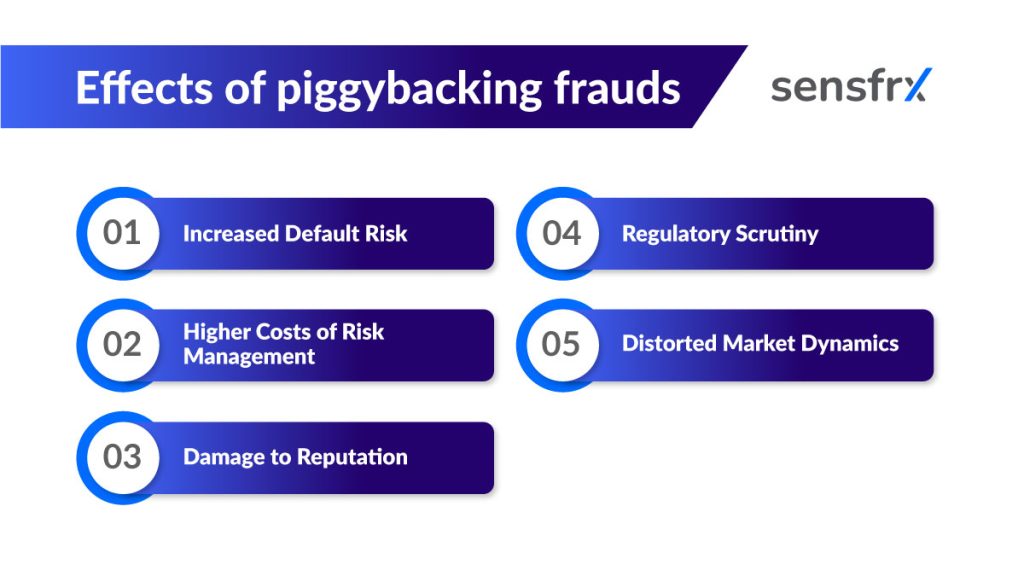
- More defaults. An inflated score puts credit in the hands of people who would not have qualified, and they default at the rate their real history predicts.
- Higher risk management costs. Monitoring and preventing the abuse takes analysts and tooling that would otherwise go elsewhere.
- Reputation damage. Customers who learn a lender was fooled trust it less.
- Regulatory scrutiny. Involvement in piggybacking can bring investigations, fines and penalties.
- Distorted markets. Artificially widened access to credit skews competition between lenders who check and lenders who do not.
How to prevent piggybacking abuse
Most of the controls sit with the cardholder, so these are the practices to follow yourself and to put in front of your customers.
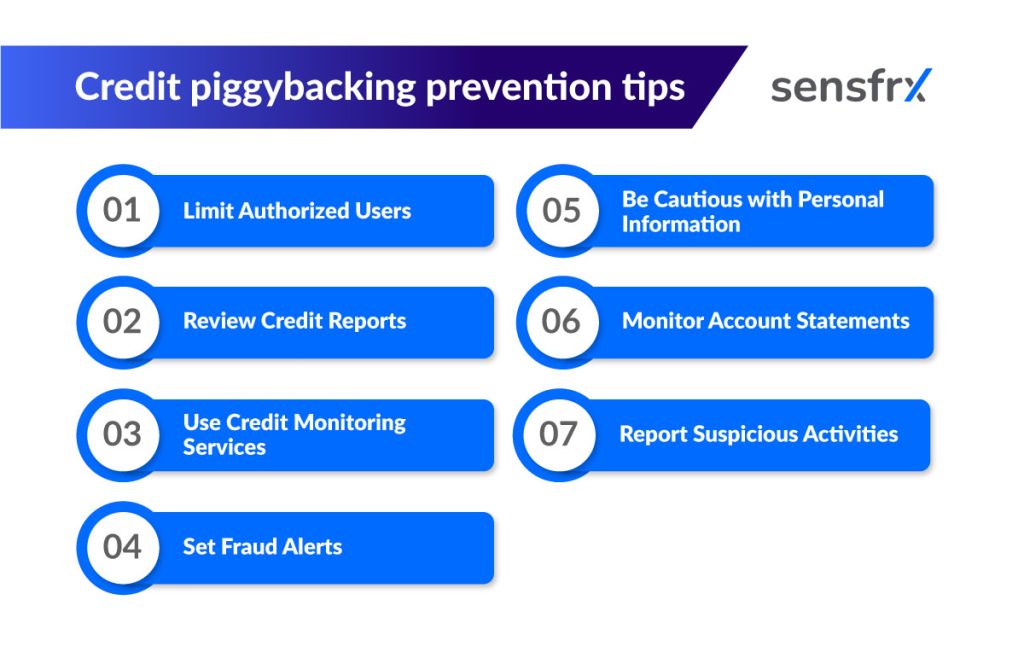
- Limit authorized users. Add only people you trust, verify who they are, and watch the activity. Even a spouse added as an authorized user deserves a monthly check of the statement for charges you do not recognize.
- Review credit reports. Look for authorized-user additions and accounts you do not recognize. Either one is a sign of piggybacking fraud; call the issuer the same day.
- Use a credit monitoring service. If you will not check by hand, pay a service to alert you when a new card is opened in your name or a user is added to an existing account.
- Set fraud alerts. A fraud alert on your credit file forces creditors to verify your identity before opening accounts or adding users.
- Guard personal information. Social Security number, date of birth and account numbers are all a piggybacker needs to get onto your accounts.
- Read statements. Unauthorized charges are often the first visible sign that someone else has access.
- Report it. If you suspect piggybacking or any card fraud, tell the issuer and the authorities, such as the Federal Trade Commission (FTC) or local police, at once.
How Sensfrx helps
Sensfrx scores every signup, login and payment from device, network and behavior signals. Device fingerprinting catches multiple registrations from one device, behavior models flag anomalies, and dynamic risk scoring evaluates each transaction in real time. It flags disposable email addresses, a staple of friendly fraud, alerts early on unauthorized access, and lets you write the fraud policy that turns a score into allow, review or block.
Where to start
Piggybacking fraud is growing, the methods are getting more complex, and the losses land on lenders and cardholders alike. Prevention costs time and money, but less than the defaults it stops.
Start with the two cheapest checks: device fingerprinting at signup to catch one device opening many accounts, and a risk score on each transaction. Sensfrx runs both on the free plan; sign up here.
References