Online gaming fraud: Types, warning signs and how to stop it
The main types of online gaming fraud, the warning signs, what players should do, and the controls developers use against account takeover and bonus abuse.
 By 5 mins readPublished Updated
On this page
Online gaming draws millions of players across RPGs, MOBAs and casual mobile titles, and every one of those accounts holds something worth stealing: a saved payment method, a stack of skins, a ranked standing or a bonus balance.
That makes gaming a fraud target. Account takeover, bonus abuse, phishing and stolen-card purchases are the four schemes operators see most, and each one has a counter.
Four types of online gaming fraud
Each scheme takes money or data from the player, and usually both from the platform.
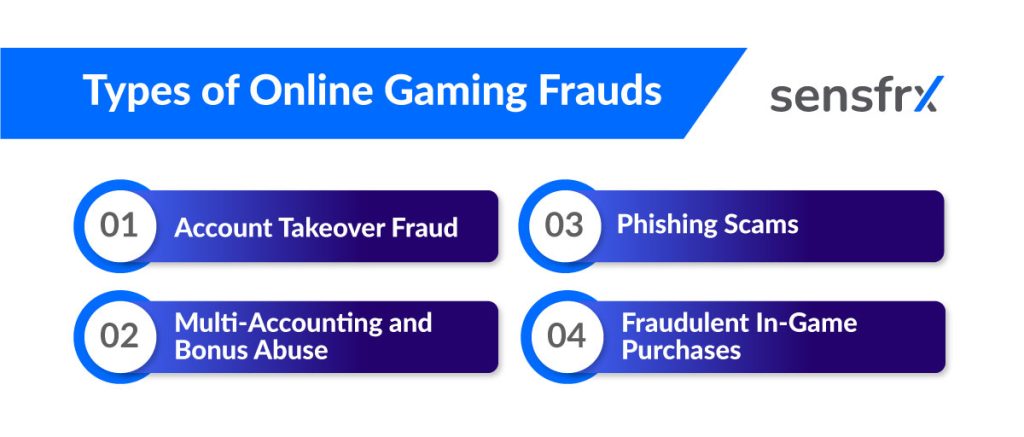
1. Account takeover
Account takeover starts with a phished or breached password. Once in, the attacker changes the password and email, strips the inventory, and runs purchases through the saved payment method before the player notices.
2. Multi-accounting and bonus abuse
Multi-accounting is the oldest trick on any platform that pays a signup or referral bonus. One person runs dozens of accounts to collect the promotion many times over. It breaks the terms of service, and it drains the marketing budget before real players see any of it.
3. Phishing
Fake login pages and emails dressed up as the platform, a tournament organizer or a skins marketplace collect credentials and card details. It feeds the account takeovers above.
4. Fraudulent in-game purchases
Stolen cards and hijacked accounts are used to buy currency and items, which get traded out fast. The chargeback arrives weeks later, after the goods are gone.
Warning signs of online gaming fraud
Most of these schemes show the same red flags before the damage is done.
| Warning Sign | Description |
| Unsolicited Communication | Be wary of messages from unknown users offering free items, in-game currency, or requesting your account details. |
| Unverified Links | Always check URLs before clicking on links; fraudulent sites often have slight variations in spelling or domain names. |
| Unusual Account Activity | If you notice unfamiliar login attempts or changes to your account settings, it may indicate unauthorized access attempts. |
| Behavioral Indicators | New accounts with suspicious email addresses or unusual sign-up patterns can suggest fraudulent activity. |
How players can prevent gaming fraud
Five habits close off the easy wins. Most of them belong in your onboarding emails.
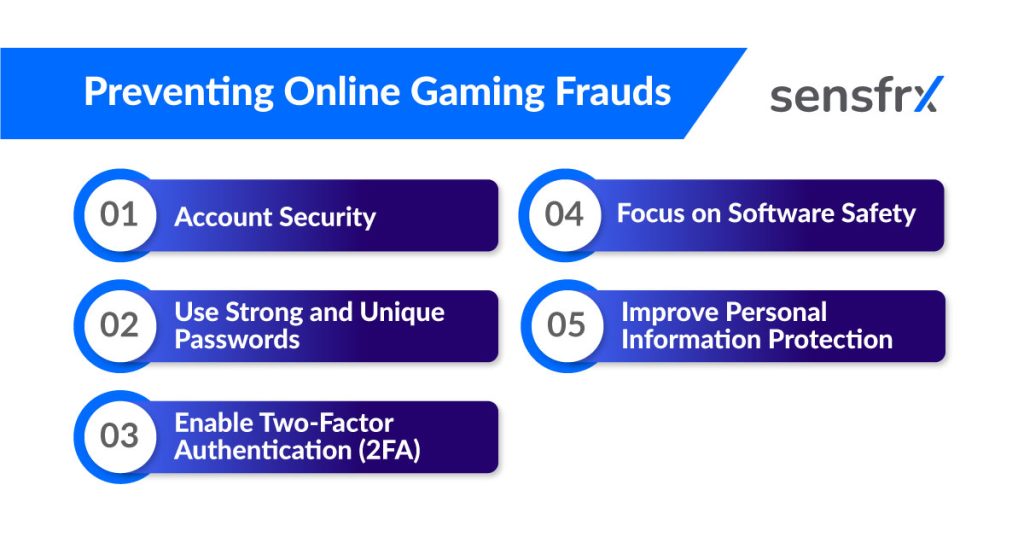
1. Account security
The account is what attackers want, and the next four habits are what keep it.
2. Strong, unique passwords
Long passwords, mixed characters, and a different one for every game and store. Nothing guessable: no birthdays, no gamertags, no dictionary words.
3. Two-factor authentication
Turn on 2FA wherever the platform offers it. A phished password on its own then gets the attacker nothing.
4. Clean software
Keep the game client and operating system patched. Skip third-party "free download" and cheat sites; the installer is often malware built to steal saved logins.
5. Less personal information in the open
Real names, addresses and phone numbers do not belong in game chat or forums. Friend requests from strangers are how scammers build trust before they ask for something.
What game developers should build in
Players can only do so much. The platform decides whether an attacker with a stolen password or a stack of fresh signups gets anywhere.
Seven controls do most of the work.
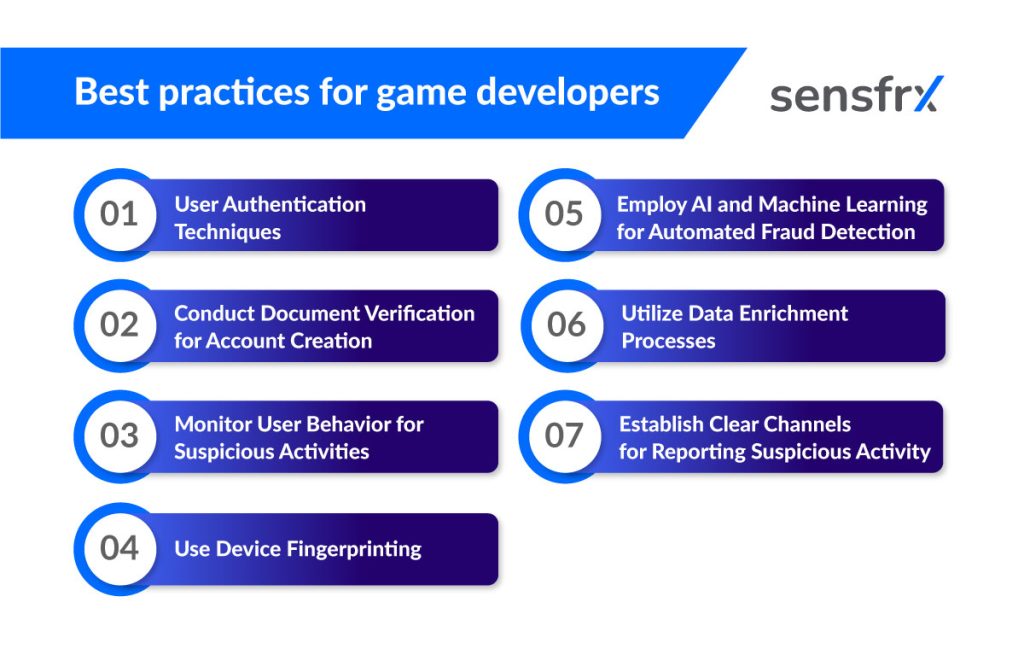
1. CAPTCHA and multi-factor authentication
A CAPTCHA on the login form slows credential-stuffing bots; MFA stops a stolen password from being enough on its own.
2. Document verification for real-money games
Where real money changes hands, verify identity against official documents before the first deposit.
3. Behavior monitoring
Track how accounts behave and alert on the patterns that come before fraud: a login from a new country followed by an email change, or a whole inventory traded to a day-old account.
4. Device fingerprinting
A device fingerprint ties accounts to hardware. Forty signups from one device is bonus abuse, whatever the email addresses say.
5. Machine learning for automated detection
Models score events in real time across more signals than a rules engine can hold, and surface the anomalies worth a human look.
6. Data enrichment
Add context to what the player gives you at registration and during play: IP reputation, device history, payment history. Each extra field sharpens the risk score.
7. Reporting channels and player forums
Put a report button inside the game, make it easy to use, and protect reporters from retaliation. Players see scams before your analytics do.
Give players a place to compare notes on scams. A forum thread about a new phishing kit reaches your community faster than a support article.
How Sensfrx helps
Sensfrx scores every signup, login and payment on your platform in real time, using device, network and behavior signals. Your rules decide what each score means: allow, review or block.
A login from an unknown device on a proxy IP gets reviewed or blocked before the inventory moves. A burst of signups sharing a device fingerprint gets stopped before the bonus pays out. A purchase that does not fit the account's history gets held for review.
What it covers on a gaming platform:
- Account takeover: every login scored against the account's usual device, network and behavior, with review or block when it diverges.
- Payment fraud: purchases and deposits scored in real time, so stolen cards are stopped before the goods leave the account.
- Multi-accounting and bonus abuse: signups from the same device or network linked and flagged before the promotion pays out.
Where to start
Make 2FA the default and push it in onboarding. Then put device fingerprinting on signup, so bonus abuse stops paying, and score logins so a stolen password is no longer enough.
Start a free trial and run it against your own signup and login traffic.